
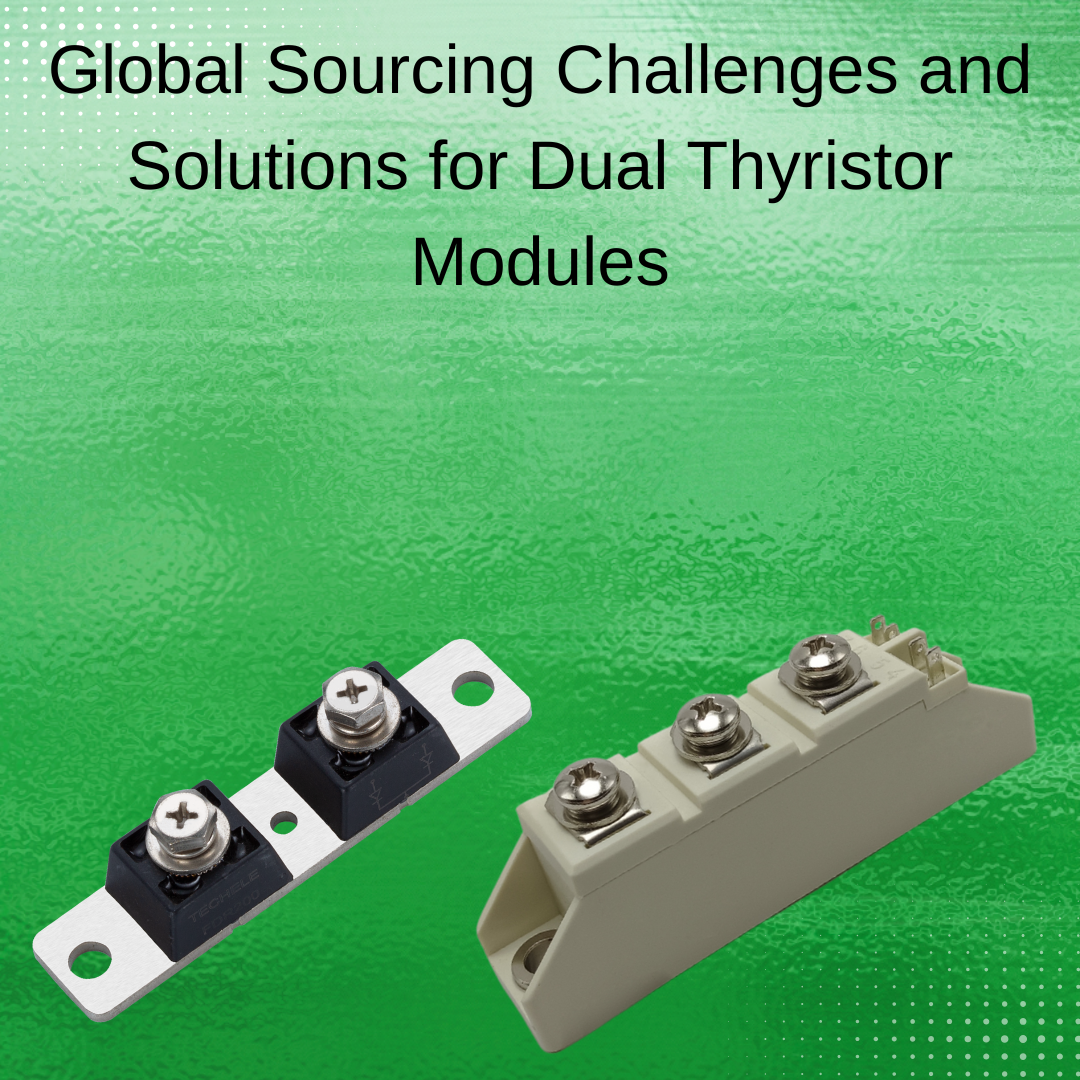
Global Sourcing Challenges and Solutions for Dual Thyristor Modules
In an increasingly globalized supply chain environment, sourcing high-performance components like high surge current low on‑state voltage industrial phase control dual thyristor modules involves balancing quality, cost, logistics, and lead time. Industrial-grade UPS systems rely on consistent availability of these modules, which must meet exacting specifications and be delivered on time to avoid production delays. This article explores the global sourcing challenges associated with thyristor modules and presents effective solutions for procurement professionals and supply chain strategists.
1. Complexity of International Supply Chains
Sourcing dual thyristor modules internationally exposes buyers to a range of logistical and regulatory complexities. Lead times vary significantly by region, with some manufacturers located in countries where semiconductor production is centralized. Political disruptions, customs delays, and limited local support can hinder delivery timelines.
The 250A desalination smart grid high surge current low on‑state voltage industrial phase control dual thyristor module, for instance, is often manufactured by specialized suppliers in Europe and Asia. Importing into North America or the Middle East requires compliance with import regulations, duty structures, and even country-specific testing certifications.
To mitigate such challenges, work with suppliers that offer:
Regional stocking hubs
Customs clearance support
Trade agreement benefits (like USMCA, EU-Vietnam FTA)
Multi-modal shipping options
2. Managing Quality Across Borders
Global sourcing increases the risk of inconsistencies in module quality and specifications. Even small deviations in parameters like VTM, ITSM, or case insulation can compromise a UPS system's safety or functionality.
The 1.2V high frequency bottling high surge current low on‑state voltage industrial phase control dual thyristor module, used in high-speed control systems, is especially sensitive to gate triggering timing and thermal dissipation values. Procure from vendors that provide:
Batch-level electrical testing data
Certificates of Conformance (CoC) and Analysis (CoA)
Access to manufacturing lot numbers
On-site or third-party inspection prior to shipment
Utilizing Authorized Economic Operators (AEOs) or ISO-certified suppliers helps ensure adherence to international quality standards, especially for modules used in precision applications like radar, laser, or power correction systems.
3. Currency Volatility and Procurement Budgeting
Purchasing thyristor modules in foreign currencies exposes buyers to exchange rate risk. A shift of even a few percentage points can impact large-scale industrial orders significantly.
When sourcing the power factor radar laser high surge current low on‑state voltage industrial phase control dual thyristor module, include currency clauses in contracts, or consider pre-purchasing in bulk during favorable currency conditions. Risk can be further mitigated through:
Currency hedging instruments
Fixed-price contracts over longer terms
Multi-currency payment platforms with real-time rates
4. Ensuring Timely Delivery Despite Global Disruptions
Natural disasters, pandemics, and geopolitical tensions can disrupt the semiconductor supply chain. To ensure continuity of supply:
Diversify suppliers across multiple regions
Develop second-source options for key modules
Maintain a rolling safety stock of critical components
For high-value parts like the 250A desalination smart grid high surge current low on‑state voltage industrial phase control dual thyristor module, some companies use bonded warehousing near manufacturing plants or partner with third-party logistics (3PL) providers offering real-time inventory tracking and replenishment alerts.
5. Conclusion: Building a Resilient Global Sourcing Strategy
The complexity of globally sourcing high surge current low on‑state voltage industrial phase control dual thyristor modules requires a balance of cost-efficiency, quality assurance, and delivery reliability.
250A desalination smart grid modules should be sourced from ISO-certified suppliers offering regional distribution and strong customs support.
1.2V high frequency bottling modules demand vendors that provide traceable test results and conformance certificates.
power factor radar laser modules benefit from fixed-rate contracts and dual sourcing to navigate currency and geopolitical risks.
By implementing resilient sourcing frameworks and establishing long-term partnerships with reputable vendors, organizations can secure reliable access to the thyristor modules that power their most critical UPS infrastructure.
READ MORE:
Forecasting and Planning Thyristor Module Demand in Industrial Supply Chains
Navigating Vendor Negotiations for Dual Thyristor Modules in Industrial Applications
Evaluating Cost, Quality, and Lead Time in Thyristor Module Procurement
Streamlining Procurement of Dual Thyristor Modules for Industrial Power Systems
Selecting the Right Dual Thyristor Module for UPS Applications
Thermal Management Strategies for Dual Thyristor Modules in UPS Systems
Torque, Cooling, and Compatibility: SEMIPACK 106A Thyristor Modules in UPS Power Architecture
Troubleshooting Thyristor Module Failures in UPS Systems: A Technical Overview
Maintenance Best Practices for Thyristor Modules in Industrial UPS Systems